Open the app

Guide · Layouts

Straight vs Diagonal Tile Layout

The short answer

Straight vs diagonal tile layout — same room, same tile: a diagonal layout needs about 5% more tiles than straight — order at 15% waste instead of 10%. On a 12 m² floor in 600 × 600 mm tiles that is 40 tiles instead of 38. Diagonal buys you a room that looks bigger and hides out-of-square walls; it costs cuts, time and those two extra tiles.

3 mm floors, 2 mm walls is typical
10% straight · 15% diagonal & herringbone

Type your room size and tile size — the answer appears here as you type.

Straight vs diagonal: what actually differs?

The tiles cover the same floor either way — the area maths does not change. Everything else does: how the borders are cut, how the room reads visually, how forgiving the layout is of a room that is not perfectly square, and how long the job takes. The honest comparison is not "which is better" but "which suits this room".

Diagonal tile layout diagram
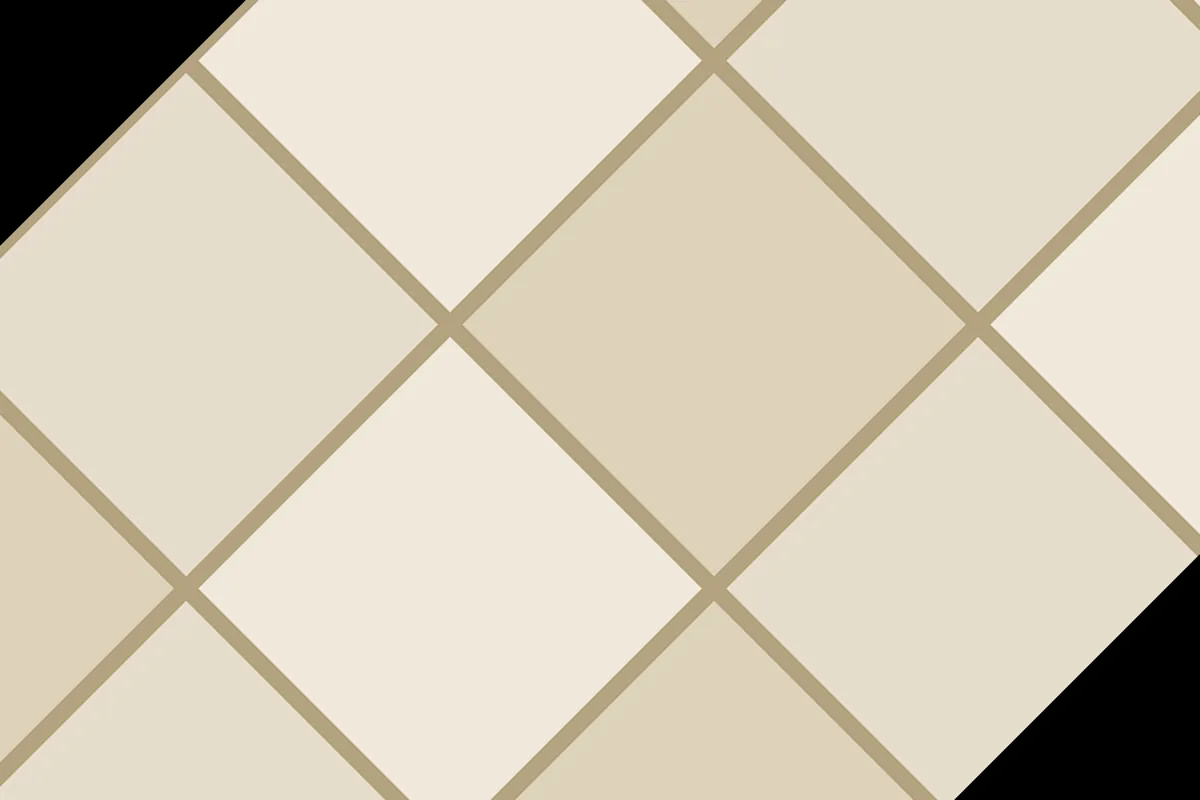
Diagonal: the grid rotated 45°. Every border becomes a row of triangles and diamonds.
Straight grid tile layout diagram
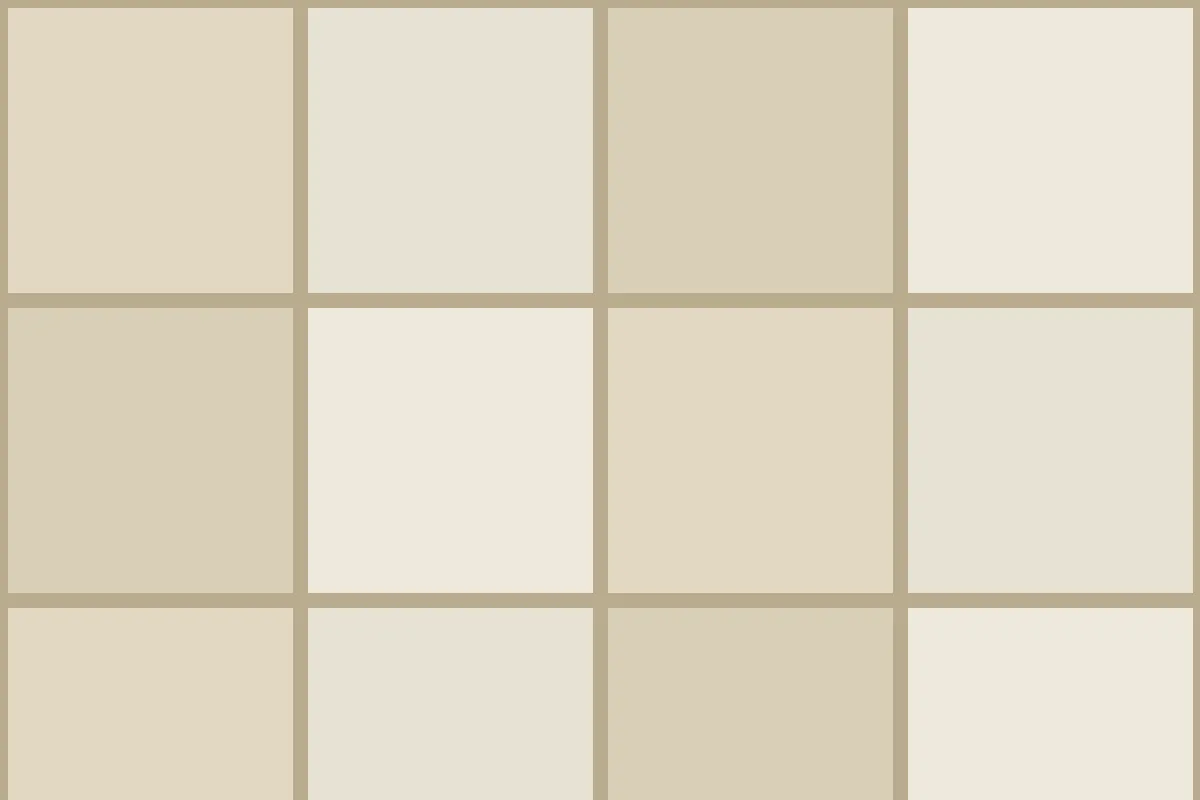
Straight: the grid aligned to the walls. Borders are simple L-cuts and offcuts transfer between sides.

The comparison, point by point

PointStraight (grid)Diagonal (45°)
Tiles to order (12 m², 600 × 600)38 (10% waste)40 (15% waste)
Border cutsOne straight cut per border tileTwo angled cuts per border tile
Offcut reuseHigh — offcuts fit opposite edgesLow — triangles rarely fit anywhere
Effect on room sizeNeutral; grid emphasises true dimensionsReads larger and wider — a classic small-room trick
Out-of-square wallsExposes them — cuts taper visiblyHides them — angled borders mask taper
Laying timeBaselineNoticeably slower; more cuts, more setting-out
Best forMost rooms, large formats, planksSmall square-ish rooms, period styles, feature floors

And herringbone?

Herringbone sits with diagonal in the waste table — 15% — because its borders are angled on both axes. It is usually laid with planks or brick-shaped tiles, and its offcuts are as unusable as diagonal's triangles. The visual payoff is the highest of the three; so is the setting-out time. Chevron is herringbone's neater cousin (mitred ends, factory-cut) with the same waste allowance.

Herringbone tile joint schematic
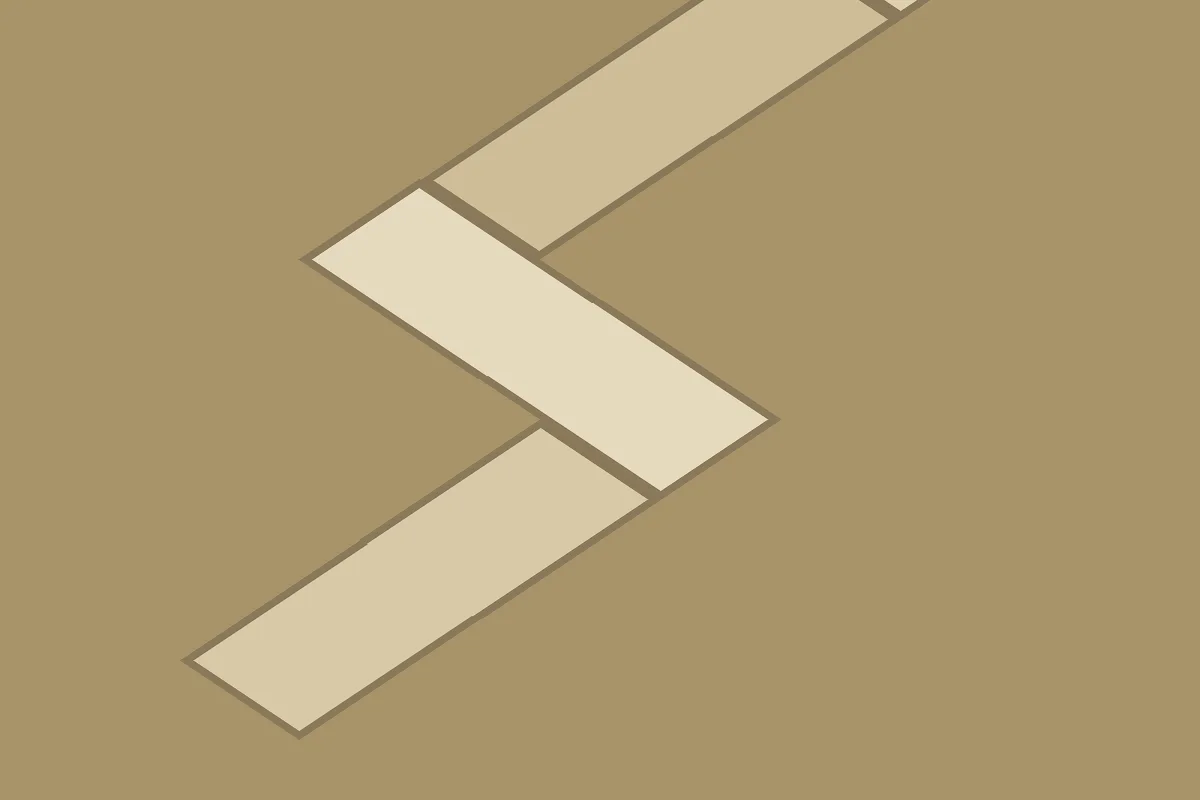
How a herringbone joint fits: each plank's end meets the next plank's side at 90°, building the zigzag.

Which should you choose?

Whichever you choose, set the pattern in the tile calculator and the waste allowance follows automatically — or read the waste guide for the reasoning in full.

Setting out: where each layout starts

The count tells you how many tiles; the setting-out decides whether they look right. For a straight layout, the professional habit is to start from the room's visual centre — the middle of the main sight-line from the door — and work outward, so the cut tiles at opposite edges come out balanced and equal. Starting whole tiles from one wall is faster but leaves a full tile on one side and a sliver on the other, and slivers under about a third of a tile look like a mistake even when they are not. Balanced setting-out does not change the count materially (the waste allowance already assumes edge cuts), but it is the single biggest difference between a floor that looks fitted and one that looks approximate.

Diagonal setting-out starts from the same centre, with the grid rotated: tilers snap two diagonal chalk lines through the centre point and dry-lay the first diamond to check the border pattern before adhesive appears. The thing to check in the dry run is the border: you want the triangular cuts at opposite edges to mirror each other, which sometimes means shifting the centre point by half a tile. That half-tile shift is free at the dry-lay stage and expensive after the first row is stuck.

Beyond tiles: what diagonal really costs

The two extra tiles in the comparison table are the smallest part of diagonal's price. The real costs are time and cuts: every border tile needs an angled cut, most need two, and angled cuts in porcelain are slower and chip more readily than straight ones. On a DIY timeline, budget roughly a third more laying time for the border rows. Against that, set the savings diagonal can bring in an old room: a straight layout in an out-of-square room often needs tapered cuts along an entire wall — slow, skilled work — where the diagonal border absorbs the taper invisibly. In a genuinely crooked room, diagonal can be the faster honest option, not the slower one.

Whichever layout you land on, dry-lay enough of the pattern to see the borders before anything is fixed. Ten minutes with loose tiles is the cheapest design tool in the whole project.
Frequently asked questions

How many extra tiles does a diagonal layout need?

About 5% more than a straight layout on the same floor: order at 15% waste instead of 10%. On the 12 m², 600 × 600 mm example in this guide that is 40 tiles instead of 38 — and box rounding sometimes absorbs the difference entirely, so check the box count before assuming diagonal costs more.

Does diagonal tiling make a room look bigger?

Yes — it is one of the oldest tricks in tiling. The 45° grid removes the direct visual comparison with the walls, so the eye reads the longest sight-lines in the room and the space feels wider. The effect is strongest in small, square rooms with plain tiles.

Is diagonal or straight better for a bathroom?

For a small bathroom floor, diagonal is often the better look and hides out-of-square walls well. For bathroom walls, straight or brick bond is calmer and far quicker around fittings. Many bathrooms mix them: diagonal floor, straight walls.

Can I lay large tiles diagonally?

You can, but 600 × 1200 mm tiles at 45° demand a very flat floor, careful setting-out and a lot of angled cuts — it is professional territory. Large formats are almost always laid straight or in a brick offset, which also keeps waste at 10%.

Does herringbone need more tiles than diagonal?

About the same: both are ordered at 15% waste. Herringbone's border cuts are angled on two axes, diagonal's on one, but diagonal throws away more unusable triangles per border tile. In practice they land within a tile of each other on typical rooms.