Free · Imperial & metric · 7 country editions
Quick answer: a tile calculator divides your room's area by the area one tile covers — grout gap included — rounds up, then adds waste. A 100 sq ft room with 12×12 in tiles and a 1/8 in gap needs 98 tiles net, 108 to buy at 10% waste: 8 boxes at 15 sq ft per box. Type your own numbers below — the answer updates as you type.
Free · No sign-up · Nothing you type is stored or sent anywhere · Prefer an app? Open the installable tile calculator app
Every tile calculator runs on the same four steps — the difference between a good one and a guess is whether the grout gap and the waste are handled honestly. Here is exactly what happens when you type above:

Open Boxes, grout & adhesive in the calculator and the same answers extend to a full shopping list: boxes (by tiles per box or by coverage per box, whichever your label prints), kilograms of grout from the manufacturers' joint formula, adhesive from the coverage rate on your bag, and a cost estimate worked out only from a price you type in — this site publishes no prices of its own.
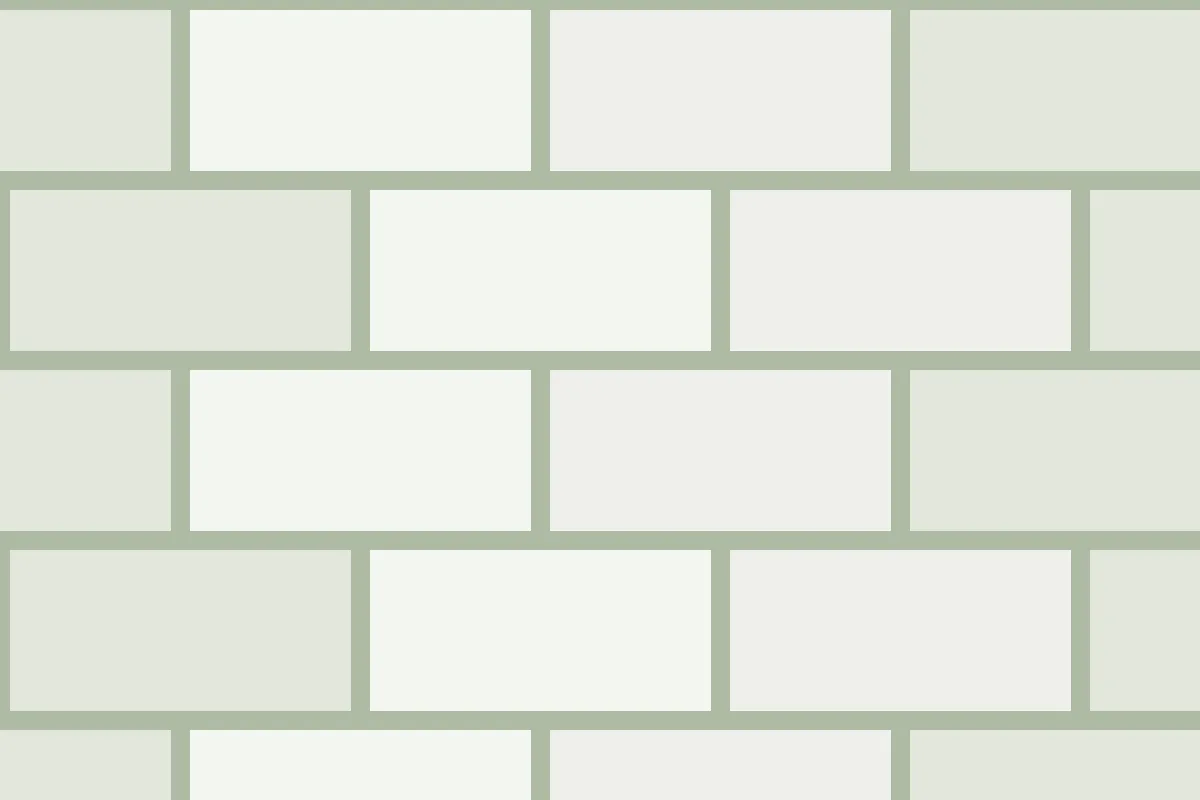
For a fast estimate before you measure properly: these counts include the grout joint (1/8 in on the imperial table, 3 mm on the metric table) but no waste — add 10% on top for a straight layout.
| Tile size | Tiles per 100 sq ft |
|---|---|
| 4 × 4 in | 847 |
| 6 × 6 in | 384 |
| 3 × 6 in (subway) | 753 |
| 12 × 12 in | 98 |
| 6 × 24 in (plank) | 98 |
| 12 × 24 in | 50 |
| 18 × 18 in | 44 |
| 24 × 24 in | 25 |
| Tile size | Tiles per m² |
|---|---|
| 200 × 200 mm | 24.27 |
| 300 × 300 mm | 10.89 |
| 100 × 300 mm | 32.04 |
| 300 × 600 mm | 5.47 |
| 150 × 600 mm | 10.84 |
| 600 × 600 mm | 2.75 |
| 600 × 1200 mm | 1.38 |
Notice the 600 × 600 mm line: with no joint at all the textbook figure is 2.78 tiles per m², but a real 3 mm joint drops it to 2.75 — over a 40 m² living area that is a full tile of difference, which is why a calculator that ignores the gap quietly under-orders.
Tile sizes, box labels and units differ by country — pick yours for local defaults, local tile sizes and local worked examples.
Already know the area? Convert sq ft or m² straight into tile counts.
The right waste percentage for straight, diagonal, herringbone and awkward rooms.
Waste is not padding — it is the cuts at every edge, the tile that cracks in the cutter, and the two spares you will want in the cupboard in five years. The calculator sets it automatically when you pick a pattern:
| Layout | Waste to add | Why |
|---|---|---|
| Straight grid, rectangular room | 10% | Edge cuts only; offcuts often reusable |
| Brick bond / offset | 10% | Same cuts, slightly more breakage on offset cuts |
| Diagonal (45°) | 15% | Every edge tile is cut twice; triangles rarely reusable |
| Herringbone / chevron | 15% | Angled cuts at every border, most offcuts wasted |
| Mosaic sheets / very small tiles | 15% | Sheets get trimmed on most edges |
| Rooms with alcoves, bays or many corners | 15–20% | More perimeter = more cuts per square metre |
Full reasoning, room-shape examples and a waste-only calculator live in the tile waste percentage guide and the tile waste calculator.
Measure the room's length and width, multiply for the area, then divide by the area one tile covers including its grout joint. Round up to whole tiles, add 10% waste for a straight layout (15% for diagonal or herringbone), and round up again. The calculator above does all four steps as you type — or read the full walkthrough in how to calculate how many tiles you need.
Yes — each tile effectively covers its face plus one joint width in each direction. A 12 × 12 in tile on a 1/8 in joint covers 12.125 × 12.125 in, so 100 sq ft needs 98 tiles instead of the 100 a no-gap calculation suggests. The smaller the tile, the bigger the effect: 200 × 200 mm tiles drop from 25 per m² to 24.27 once a 3 mm joint is counted.
It depends on the tile and the maker — there is no standard count. Boxes are labelled either with a tile count or with the area they cover (for example 1.44 m² or 15 sq ft). Enter whichever your label prints under Boxes, grout & adhesive in the calculator, or use the dedicated tiles per box calculator.
Yes. The waste percentage already leaves some overage, and keeping 2–4 spare tiles from the same batch matters: tile shades vary between production batches (the calibre and shade codes on the box), so a tile bought next year may not match. Store spares flat, in the box, somewhere dry.
Yes — the maths is identical for floors and walls; only the defaults differ (walls usually take a narrower joint and smaller tiles). The wall tile calculator starts with wall-friendly settings and covers splashbacks and shower walls surface by surface.
Neither. This site publishes no tile prices and stores nothing you type. If you enter your own price per box, per tile or per square unit, the calculator multiplies it by the quantities — the maths happens in your browser only.